Tag: history

  • Azurite: The Mineral That Painted History

    Azurite: The Mineral That Painted History

    Every now and then, I get to write about a topic that combines geology, history, art, and a little bit of mystery. One of my favourite examples of this is a SciShow video I wrote about azurite, a striking blue mineral that humans have been using to make art for thousands of years.
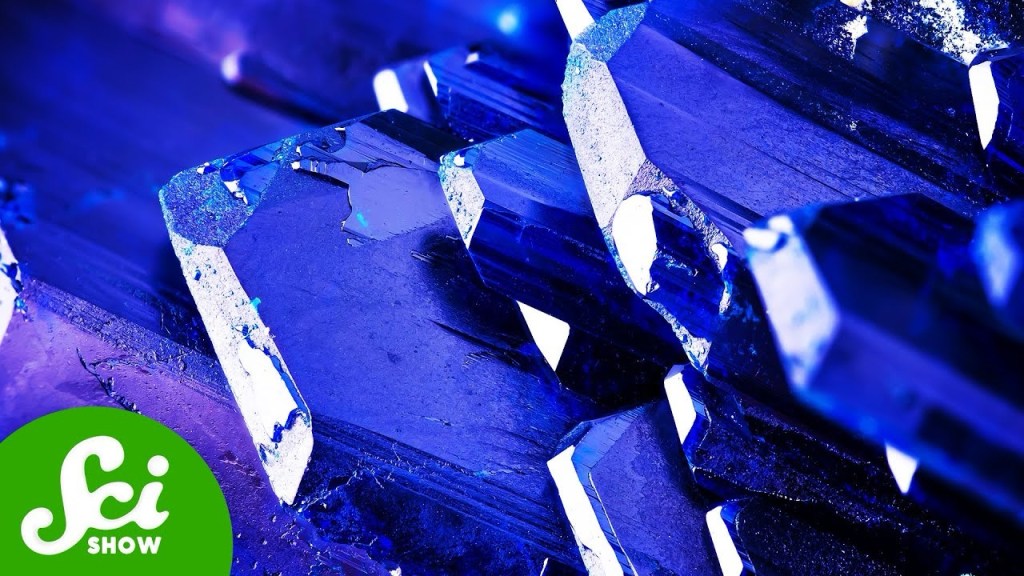
    Is this the most popular blue in all of history?

    Unlike many minerals that are prized for their sparkle or the metals they contain, azurite’s value lies in its colour. When crushed, it turns into a vivid blue powder that can be turned into pigment, and artists across the world have been doing exactly that since at least the time of the ancient Egyptians.

    Geologically, azurite is a copper carbonate mineral that forms when copper-rich rocks near the surface weather and oxidize. If you’ve ever seen a copper pipe develop a bluish-green patina, you’ve seen a similar process in action. Deposits of azurite were fairly common in parts of Europe like modern-day Slovakia, France, Hungary, and Sardinia, which made it a popular pigment during the medieval period. While ultramarine (made from lapis lazuli) was the prestige blue, it was incredibly expensive, so azurite was often used underneath to reduce the amount of ultramarine needed.

    There was a catch though. Over time, azurite can chemically alter into malachite, shifting from blue to a rather sickly green. If you’ve ever noticed medieval paintings with unexpected green patches, this mineral transformation is likely to blame.

    In China and Japan, artists took a different approach. By grinding azurite to different degrees, they created a whole palette of blues, from pale sky to deep midnight. The mineral carried symbolic meaning too, representing longevity and immortality, and during China’s Ming dynasty it became so valuable that it was collected as tax and was worth up to 2000 times the price of silver.

    And then there’s Egypt. For years, archaeologists debated whether ancient Egyptians used natural azurite alongside their famous man-made “Egyptian blue.” It took until the mid-2000s for Raman spectroscopy to confirm that yes, azurite was indeed part of their artistic toolkit. One of my favourite details is a scrap of painted leather from the time of Pharaoh Hatshepsut, featuring vivid azurite blues in a rather risqué scene.

    I loved writing this piece because it shows how a single mineral can weave through so many different stories, linking geology to art and culture across continents and millennia.

    You can watch the full video here:

  • The World’s Biggest Geode (and How It Saved a Winery)

    The World’s Biggest Geode (and How It Saved a Winery)

    Like many children, I was captivated by museum gift shops, especially the shelves of glittering geodes. Crack one open and you’re rewarded with a surprise display of crystals hidden inside. Those pocket-sized treasures, though, are nothing compared to the largest geode in the world – one so vast it could swallow the entire gift shop whole.

    Interior of a geode cave with large, crystalline formations on the ceiling, two visitors gazing in awe at the stunning mineral display.

    The story begins in 1897 on South Bass Island, Ohio, where German-American winemaker Gustav Heineman had set up a vineyard. When he ordered a well to be dug to supply water for his vines, workers broke into a cavern 12 metres down. Instead of solid rock, they found a cave lined with enormous crystals.

    The cave’s origins trace back hundreds of millions of years. During the Silurian period, 430 million years ago, this part of North America was covered by shallow seas. Layers of sedimentary rock formed, including lenses of the evaporite mineral anhydrite (calcium sulfate). Fast forward to the end of the last Ice Age: meltwater from retreating glaciers and nearby Lake Erie seeped through the rocks, dissolving the anhydrite and leaving behind empty cavities.

    Normally, these spaces might become crystal-lined geodes filled with quartz or amethyst. But here, something unusual happened. The groundwater was rich in strontium. As it interacted with the dissolving anhydrite, calcium ions were replaced by strontium, forming celestine – pale blue, glassy crystals of strontium sulfate. Over thousands of years, they grew to extraordinary sizes, some more than a metre across, filling the cavern with their sky-coloured sparkle.

    The cave, however, didn’t remain untouched. In the early 20th century, miners extracted around 150 metric tons of celestine crystals, not as souvenirs but as a source of strontium for the fireworks industry, where it produced a brilliant crimson flame. The removal enlarged the cavern to its current size – 11 metres across and tall enough to stand in.

    Recognising an opportunity, Heineman’s son Norman opened the cave to visitors in 1919. The timing was fortuitous: during Prohibition, when most Ohio wineries were forced to shut, ticket sales to the “Crystal Cave” (along with grape juice) kept the business alive.

    Today, more than a century later, the Heineman Winery and its glittering celestine cavern still welcome tourists, making South Bass Island home to both award-winning wines and the largest geode on Earth.


    This year I’ve had the pleasure and privilege of writing a series of mineral-focused scripts for SciShow’s limited-run Rocks Box subscription. It’s been such a joy being able to nerd out about rocks and minerals. I’ll write about anything, but geology will always be my first love. Watch this space for many more rocks-related updates!

    Watch the full video from SciShow here: