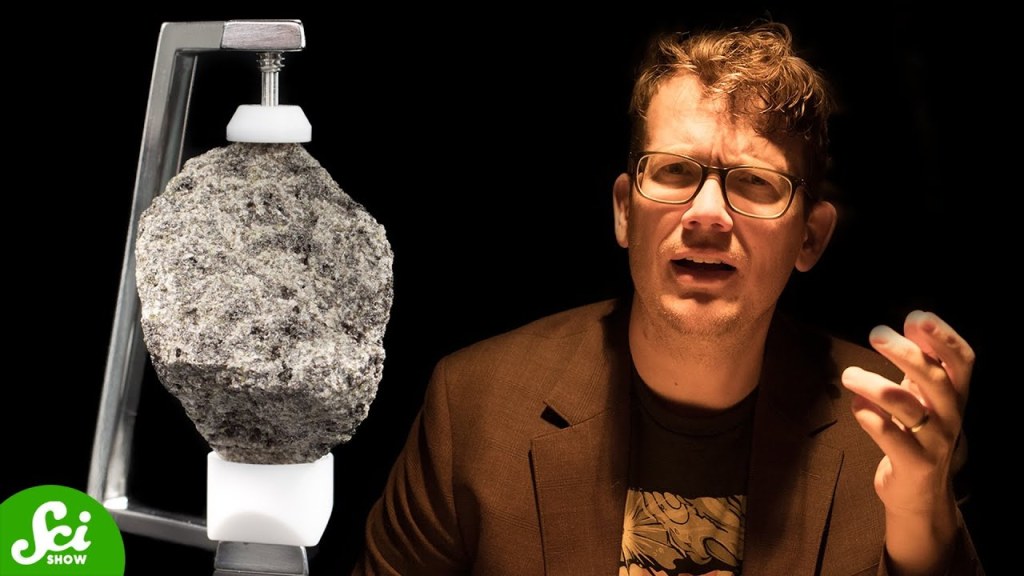
On July 20, 2002, 33 years to the day after Apollo 11’s first moon landing, NASA intern Thad Roberts was about to make history of his own, not by stepping into space, but by stepping into a Florida restaurant with a fishing tackle box full of stolen moon rocks.
Roberts, once a promising student in NASA’s competitive internship program, had orchestrated a bold theft from Houston’s Johnson Space Center. With help from fellow interns, he wheeled out a 300-kilogram safe containing over 100 grams of moon rock samples collected from every Apollo mission. His goal? Sell them on the black market to a Belgian mineral collector for $100,000.
But what Roberts didn’t know was that his buyer had tipped off the FBI, and the supposed meeting in Orlando was in fact a sting operation. Roberts and his accomplices were arrested before the deal could be made. However, even though NASA’s most valuable scientific specimens were recovered, irreparable damage had already been done.
That’s because moon rocks are more than just souvenirs. They are also priceless scientific tools and symbolic relics. The Apollo missions brought back 382 kilograms of lunar material, which has since been carefully cataloged and stored in airtight vaults more secure than some banks. These samples have unlocked secrets of our solar system, helping scientists confirm the “giant impact” theory of the Moon’s formation and offering insights into early planetary geology.
Thad saw his theft as a victimless crime, but many of the samples he stole became scientifically unusable due to contamination and mishandling. Worse still, he also discarded irreplaceable research notebooks belonging to a senior NASA scientist, essentially trashing 30 years of work.
But Roberts’ story is just one thread in a larger tale: he’s not the only person to have been preoccupided with moon rocks over the years. After Apollo 11 and 17, the U.S. gifted tiny moon rock samples to all 50 US states and over 100 countries as diplomatic “Goodwill Rocks.” Many have since gone missing—lost in museum fires, stolen from public displays, or secretly sold on the black market. Over the years, about 240 of the total 30 goodwill rocks have gone missing, and former NASA special agent Joseph Gutheinz has made it his mission to recover these missing moon rocks.
Gutheinz’s obsession began when he led a successful sting operation in 1998 to recover Honduras’s Apollo 17 rock. Since then, he’s involved students in the search, too, and together they’ve tracked down samples buried in archives, sitting in governors’ offices, and stashed in private collections. They’ve located 78 of them, but around 159 remain unaccounted for.
Meanwhile, the legal sale of any Apollo moon rock remains strictly forbidden, but that doesn’t stop lunar material fetching millions on the black market. One gram of Apollo dust could be worth over $2 million, based on the cost of the missions. Even a speck from a Soviet sample return mission has sold for hundreds of thousands. It’s little wonder Thad Roberts went to the effort he did for a few teaspoons of lunar material.
More than two decades later, Roberts’ heist stands as a cautionary tale: about ambition gone rogue, about the fragility of scientific legacy, and about the enduring fascination with the Moon. For those like Gutheinz, the mission continues—not to return to the Moon, but to return pieces of it back to the people.
Watch the full video here:

 Leila Battison