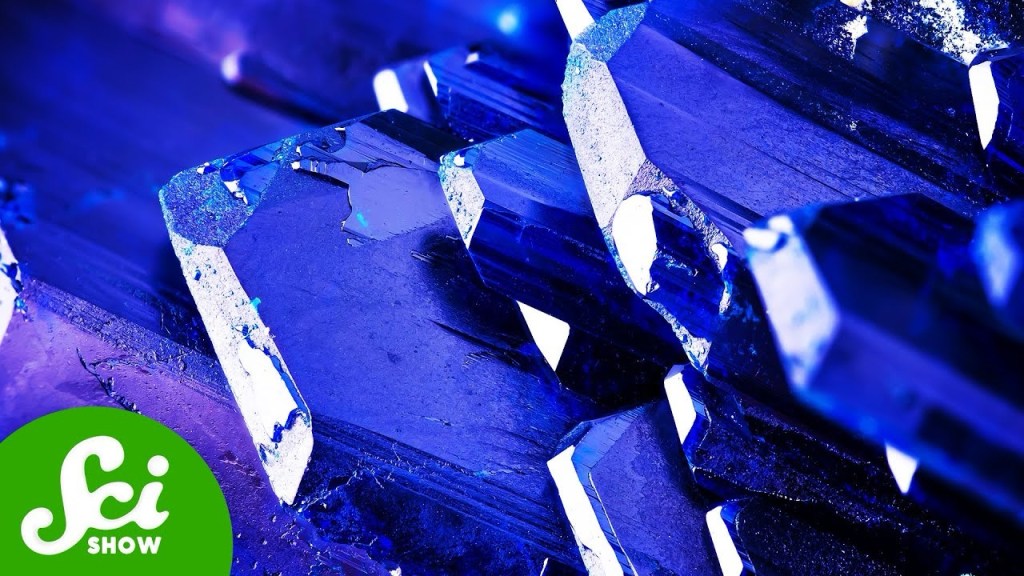
Every now and then, I get to write about a topic that combines geology, history, art, and a little bit of mystery. One of my favourite examples of this is a SciShow video I wrote about azurite, a striking blue mineral that humans have been using to make art for thousands of years.
Is this the most popular blue in all of history?
Unlike many minerals that are prized for their sparkle or the metals they contain, azurite’s value lies in its colour. When crushed, it turns into a vivid blue powder that can be turned into pigment, and artists across the world have been doing exactly that since at least the time of the ancient Egyptians.
Geologically, azurite is a copper carbonate mineral that forms when copper-rich rocks near the surface weather and oxidize. If you’ve ever seen a copper pipe develop a bluish-green patina, you’ve seen a similar process in action. Deposits of azurite were fairly common in parts of Europe like modern-day Slovakia, France, Hungary, and Sardinia, which made it a popular pigment during the medieval period. While ultramarine (made from lapis lazuli) was the prestige blue, it was incredibly expensive, so azurite was often used underneath to reduce the amount of ultramarine needed.
There was a catch though. Over time, azurite can chemically alter into malachite, shifting from blue to a rather sickly green. If you’ve ever noticed medieval paintings with unexpected green patches, this mineral transformation is likely to blame.
In China and Japan, artists took a different approach. By grinding azurite to different degrees, they created a whole palette of blues, from pale sky to deep midnight. The mineral carried symbolic meaning too, representing longevity and immortality, and during China’s Ming dynasty it became so valuable that it was collected as tax and was worth up to 2000 times the price of silver.
And then there’s Egypt. For years, archaeologists debated whether ancient Egyptians used natural azurite alongside their famous man-made “Egyptian blue.” It took until the mid-2000s for Raman spectroscopy to confirm that yes, azurite was indeed part of their artistic toolkit. One of my favourite details is a scrap of painted leather from the time of Pharaoh Hatshepsut, featuring vivid azurite blues in a rather risqué scene.
I loved writing this piece because it shows how a single mineral can weave through so many different stories, linking geology to art and culture across continents and millennia.
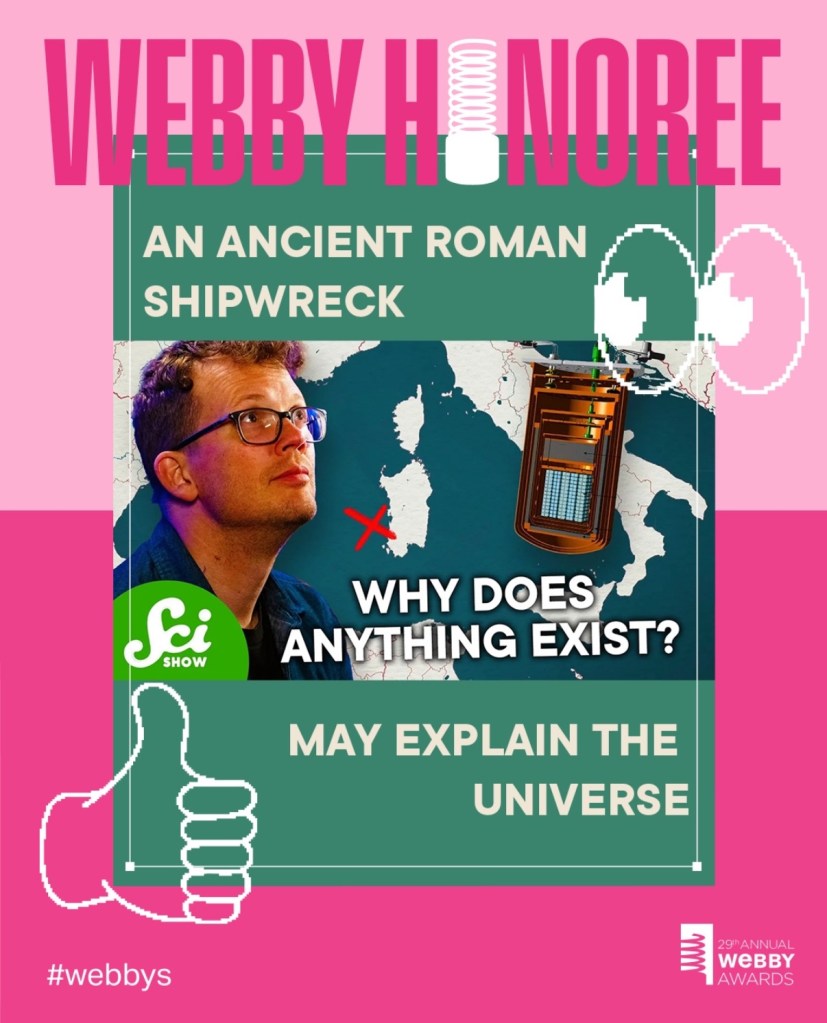
Last year I was handed one of those rare and delightful projects as a science communicator: a deep-dive story that was as strange as it was true, and that went on to reach more than 6.5 million viewers on YouTube (so far!) The video: “An Ancient Roman Shipwreck May Explain the Universe”, was later named a Webby Award Honoree. It still feels surreal to type that.
The story begins 2,000 years ago, when a Roman merchant ship, laden with more than 30 tonnes of lead ingots, sank off the coast of Sardinia. The crew probably thought they had lost everything. In fact, their cargo would end up with a second life: one that no ancient Roman could possibly have imagined.
Fast forward two millennia. That same Roman lead is now protecting the coldest cubic meter in the universe, part of an experiment buried deep under Italy’s Apennine mountains. The CUORE project, designed to study the mysterious neutrino, needed shielding so pure that modern lead was unusable. Only centuries-old metal, stripped of radioactivity by time itself, would do. So archaeologists and physicists found themselves negotiating over a shipwreck.
That unlikely collaboration became the heart of the video: a tale of archaeology colliding with particle physics, of cultural heritage pitted against cosmic mystery. At stake were two very different kinds of knowledge. Archaeologists wanted to preserve a Roman moment frozen in time. Physicists wanted to answer one of the universe’s deepest riddles: why matter exists at all.
The script wove together these threads, from the names stamped on Roman ingots to the near-impossible search for neutrinoless double beta decay. It was as much about people as particles, and about how science often advances through tension, compromise, and shared curiosity.
When we released it on SciShow, I suspected it would do well—the story has all the makings of a thriller—but I couldn’t have predicted just how widely it would resonate. The comments section filled with people marvelling at the audacity of both the Romans and the physicists, and debating the ethics of melting archaeological treasure to solve cosmic puzzles.
For me, the video represents what I love most about science communication: finding connections across time and discipline, and showing how the past and present continually shape one another. That a Roman cargo ship could one day help physicists understand why there is a universe at all—that’s the kind of story worth telling, and I’m so glad millions of people wanted to listen.
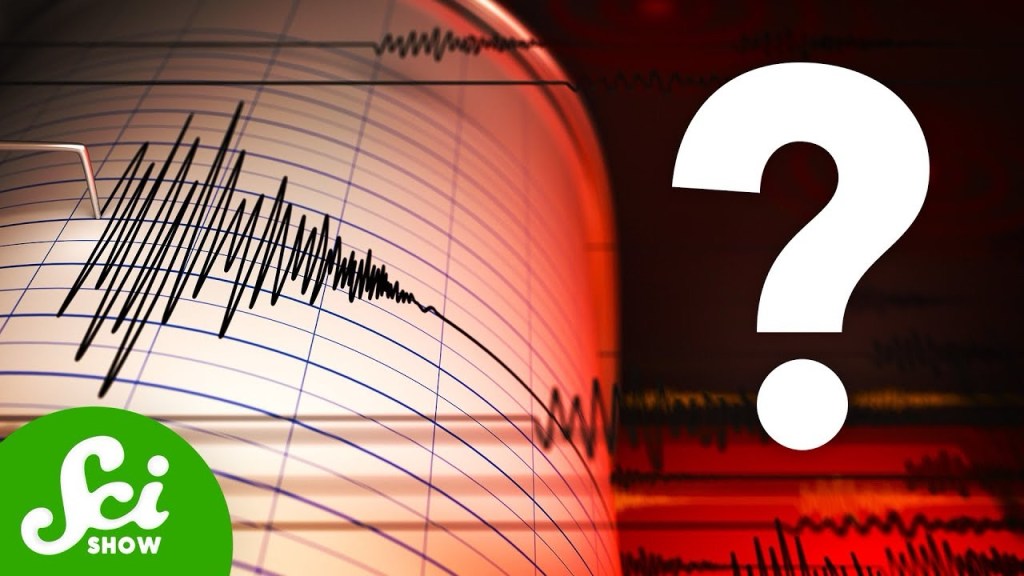
On May 5th 2024, a 4.8 magnitude earthquake shook New Jersey. It was the first sizeable quake the region had seen in years, and it made headlines across the US. What struck me, though, was how different the response was compared to the west coast, where quakes of that size happen fairly often without much fuss.
That contrast became the focus of a SciShow episode I wrote recently. On the surface, a 4.8 is a 4.8, no matter where it happens. But as I dug into the research, I was reminded that geology has a way of complicating even the neatest numbers.
The Richter scale, devised back in 1935, gave us a standard way of measuring quakes, but it was built on data from California and never really worked worldwide. These days, scientists use moment magnitude instead. It’s a more robust calculation that takes into account the properties of the rocks and the fault itself. Still, even that number can’t tell you everything about what an earthquake will feel like.
The real story is in the rocks. On the east coast, the crust is old, dense, and continuous, so seismic energy can travel astonishing distances. That’s why a 5.8 quake in Virginia in 2011 was felt almost 1,000 kilometers away, while a stronger quake in California barely carried half as far.
Then there’s the effect of what’s underfoot. If you’re standing on solid bedrock, the shaking might feel sharp but brief. But if you’re on softer sediments, the waves get amplified and drawn out. Mexico City, Christchurch, Los Angeles, all cities built on basins and old lakebeds, have all suffered devastating consequences from this “jello effect.”
One of the most fascinating (and sobering) examples I came across was the 2001 Gujarat earthquake in India. It measured 7.7 in magnitude and was felt over 1,000 kilometers away, causing tens of thousands of deaths. Just three years later, the enormous Sumatra-Andaman quake struck with a magnitude over 9. While it unleashed a catastrophic tsunami, the shaking itself wasn’t felt nearly as far afield. Same planet, same process, but completely different outcomes because of local geology.
Writing this episode was a good reminder that magnitude isn’t the whole story. Whether an earthquake feels like a distant rumble or topples buildings depends on the deep, complicated history written into the rocks beneath us.
Like many children, I was captivated by museum gift shops, especially the shelves of glittering geodes. Crack one open and you’re rewarded with a surprise display of crystals hidden inside. Those pocket-sized treasures, though, are nothing compared to the largest geode in the world – one so vast it could swallow the entire gift shop whole.
The story begins in 1897 on South Bass Island, Ohio, where German-American winemaker Gustav Heineman had set up a vineyard. When he ordered a well to be dug to supply water for his vines, workers broke into a cavern 12 metres down. Instead of solid rock, they found a cave lined with enormous crystals.
The cave’s origins trace back hundreds of millions of years. During the Silurian period, 430 million years ago, this part of North America was covered by shallow seas. Layers of sedimentary rock formed, including lenses of the evaporite mineral anhydrite (calcium sulfate). Fast forward to the end of the last Ice Age: meltwater from retreating glaciers and nearby Lake Erie seeped through the rocks, dissolving the anhydrite and leaving behind empty cavities.
Normally, these spaces might become crystal-lined geodes filled with quartz or amethyst. But here, something unusual happened. The groundwater was rich in strontium. As it interacted with the dissolving anhydrite, calcium ions were replaced by strontium, forming celestine – pale blue, glassy crystals of strontium sulfate. Over thousands of years, they grew to extraordinary sizes, some more than a metre across, filling the cavern with their sky-coloured sparkle.
The cave, however, didn’t remain untouched. In the early 20th century, miners extracted around 150 metric tons of celestine crystals, not as souvenirs but as a source of strontium for the fireworks industry, where it produced a brilliant crimson flame. The removal enlarged the cavern to its current size – 11 metres across and tall enough to stand in.
Recognising an opportunity, Heineman’s son Norman opened the cave to visitors in 1919. The timing was fortuitous: during Prohibition, when most Ohio wineries were forced to shut, ticket sales to the “Crystal Cave” (along with grape juice) kept the business alive.
Today, more than a century later, the Heineman Winery and its glittering celestine cavern still welcome tourists, making South Bass Island home to both award-winning wines and the largest geode on Earth.
This year I’ve had the pleasure and privilege of writing a series of mineral-focused scripts for SciShow’s limited-run Rocks Box subscription. It’s been such a joy being able to nerd out about rocks and minerals. I’ll write about anything, but geology will always be my first love. Watch this space for many more rocks-related updates!
At first glance, epidote might look like a perfectly ordinary rock: greenish, slightly glassy, nice enough to put on your bookshelf. But this mineral is far more than just decoration. Epidote could help unlock the mystery of life’s earliest origins on Earth, and perhaps even beyond.
The fossil record is our best archive for understanding the history of life, but it has limits. The deeper back in time you go, the harder it becomes to find intact fossils. Earth’s plate tectonics are constantly recycling rocks, and the fossils that do survive tend to be battered, squashed, or melted beyond recognition. Add to this the fact that the earliest life forms were likely tiny, soft, and strange-looking, and the trail of evidence gets very faint indeed.
That’s where minerals like epidote come into play. Formed when hot fluids percolate through volcanic rocks in a process known as epidotization, this mineral often appears in striking pistachio-green veins. On Earth today, these hydrothermal systems occur at places like mid-ocean ridges and subduction zones, where scalding fluids rise from cracks in the crust to form black smoker chimneys. Despite the heat, these are thriving ecosystems, and many scientists think they resemble the extreme environments where life first emerged billions of years ago.
Because epidote is a signature of ancient hydrothermal activity, finding it in very old rocks can point us to past habitats where early microbes might have lived. That’s exactly what researchers in the Pilbara region of northwestern Australia have been doing. The Pilbara hosts some of the world’s oldest rocks, dating back 3.5 billion years, along with some of the earliest fossil evidence of simple, bacteria-like life. These fossils are fragmentary, but the presence of epidotized rocks helps scientists target the ancient hydrothermal systems where life may once have thrived.
Epidote isn’t just about Earth’s history either. Since it flags hydrothermal activity, and by extension, potential habitability, it’s also a mineral of interest on Mars. NASA’s Spirit and Opportunity rovers have already detected trace amounts of epidote on the Red Planet, and future missions will keep watch for more. If found in the right context, those green veins could be a roadmap to places where Martian life once might have had a chance.
So, next time you see a small green crystal of epidote, remember: it’s more than just a mineral. It’s a window into life’s extreme beginnings, and perhaps a guide to finding it elsewhere in the solar system.
This year I’ve had the pleasure and privilege of writing a series of mineral-focused scripts for SciShow’s limited-run Rocks Box subscription. It’s been such a joy being able to nerd out about rocks and minerals. I’ll write about anything, but geology will always be my first love. Watch this space for many more rocks-related updates!
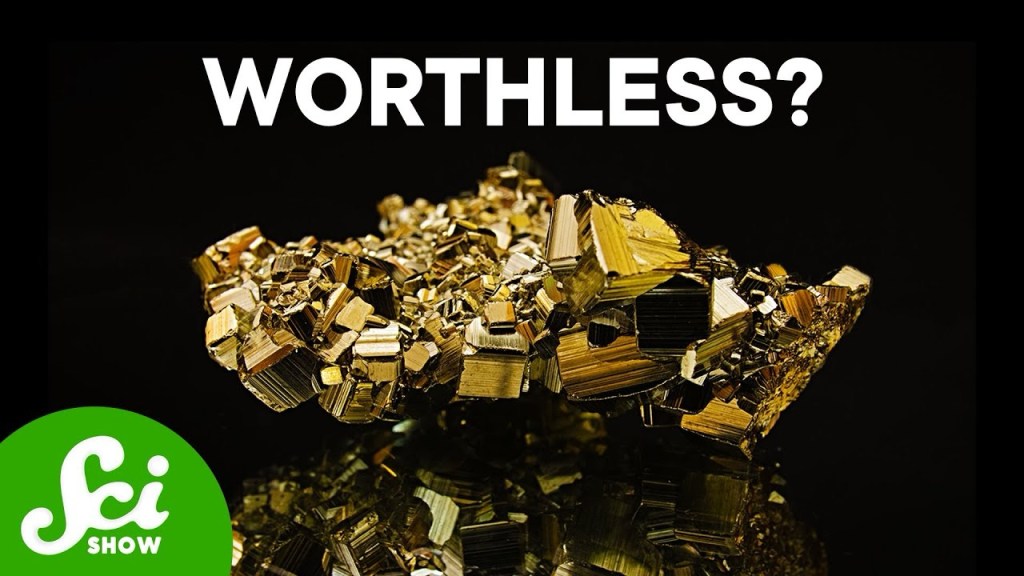
Back in the 1840s, the hills of California glittered with the promise of fortune. Prospectors rushed west, hoping to strike it rich in the Gold Rush, only to find themselves duped by an impostor: pyrite, better known as fool’s gold.
But pyrite might not be as foolish as we once imagined. Far from worthless, it’s turned out to be one of the most useful and versatile minerals we’ve ever dug out of the ground.
A Spark of Inspiration
The name pyrite comes from the Greek pyr, meaning “fire,” because striking it against metal produces sparks. Made simply of iron and sulfur, it forms into dazzling crystals shaped like cubes, octahedrons, even dodecahedrons that may have inspired Plato’s famous geometric “Platonic solids.” It’s abundant, too, appearing in mineral veins, coal seams, caves, magma intrusions, and even fossils preserved entirely in sparkling pyrite.
With so much of it around, people have found ingenious uses for it. In the 1500s, pyrite was the spark in Europe’s earliest firearms, where a steel wheel scraped against it to ignite gunpowder.
The Sulfur Connection
Surprisingly, pyrite isn’t actually a good source of iron (it’s easier to smelt from minerals like hematite), but it shines as a source of sulfur. For centuries, pyrite was roasted to produce sulfur dioxide, as the first step in making sulfuric acid, the most widely used industrial chemical on Earth. From fertilizers and car batteries to explosives and bleach, sulfur from pyrite powered industries long before oil refining took over as our main sulfur source.
Helping Copper Float
Pyrite has another trick up its sleeve. Copper is often mined from chalcopyrite, which frequently forms alongside pyrite. Extracting the copper involves a frothy separation process, literally making a copper-rich foam that floats to the surface of water tanks. But tiny chalcopyrite particles are often lost in the process.
Researchers have discovered that finely ground pyrite can act like a floatation aid, sticking to those lost copper crumbs and carrying them up into the foam. This could allow miners to recover nearly all the copper in a deposit.
The Golden Secret
And then there’s the irony: pyrite may actually be a key to finding real gold.
Because pyrite and gold often form together, rusty pyrite-rich deposits at the surface (known as gossans) can guide miners to deeper gold veins. Even more intriguingly, scientists have discovered that pyrite itself sometimes traps gold. Tiny inclusions, atom-for-atom replacements in its crystal structure, or even gold clustering in structural imperfections, all hide gold in plain sight.
The newest frontier is using rock-eating bacteria in a process called bio-leaching to tease out that hidden treasure. By targeting weakened spots in pyrite crystals where gold has accumulated, microbes could help extract the metal in a far more environmentally friendly way than traditional smelting.
More Than an Impostor
Once dismissed as a nuisance by disappointed gold-hunters, pyrite turns out to be a mineral of fire, sulfur, copper, and even gold. Fools’ gold? Hardly. Sometimes, the glittering stuff underfoot has more to offer than the treasure we think we’re chasing.
This year I’ve had the pleasure and privilege of writing a series of mineral-focused scripts for SciShow’s limited-run Rocks Box subscription. It’s been such a joy being able to nerd out about rocks and minerals. I’ll write about anything, but geology will always be my first love. Watch this space for many more rocks-related updates!
When you picture the materials behind our modern gadgets, gemstones probably don’t spring to mind. We expect wires, silicon, and circuits — not jewelry-box treasures. Yet one humble mineral, tourmaline, bridges the glittering world of gemstones with the hidden forces powering today’s technology.
Tourmaline is one of Earth’s most colorful crystals. It can emerge pink, green, blue, yellow, black, or even striped like a slice of watermelon. This kaleidoscope of color comes from its unusual crystal structure — a silicate “cage” that traps different mineral ions. Swap in iron, manganese, chromium, copper, or vanadium, and you get an entirely new hue. Sometimes the chemistry even changes mid-growth, producing spectacular gradients in a single stone.
But tourmaline’s story goes far beyond beauty. For centuries it’s been known as the “Ceylonese magnet,” a name not for its looks but for its peculiar electrical powers. Heat one up or squeeze it, and suddenly this quiet crystal becomes charged, attracting tiny particles like straw, ash, or dust. Ancient philosophers noticed the effect long before electricity had a name.
The real breakthrough came in the 19th century with Pierre and Jacques Curie (better known for their later work on radioactivity). They discovered that crystals like tourmaline don’t just respond to heat (a phenomenon called pyroelectricity) but also to pressure (piezoelectricity). Push on the crystal, and the atoms inside shift ever so slightly, separating charges to create a voltage. Reverse the process, and an electric current makes the crystal itself flex.
This property isn’t unique to tourmaline. Quartz, bone, tendon, and many engineered materials can do it too. And that’s why piezoelectricity quietly underpins so much of our modern world. The principle is at work in ultrasound microphones, submarine sensors, infrared detectors, quartz watches, inkjet printers, even the “click” of your barbecue lighter. Anywhere a system needs to sense tiny changes in pressure, temperature, or vibration, piezoelectric materials are there in the background, turning the physical world into electrical signals.
Today, industry relies on synthetic crystals or more abundant minerals rather than tourmaline. But during World War II, before substitutes were perfected, tourmaline was literally pressed into service. Scientists used it to measure the pressure waves from atomic bomb tests, recording the blast’s electrical signature in the split-second before the instruments were destroyed.
So the next time you see a piece of tourmaline glinting in a jewelry shop, remember: beneath its colors lies a hidden spark. A crystal born in the depths of the Earth, capable of powering microphones, lighters, and scientific breakthroughs.
Watch the whole video here:
This year I’ve had the pleasure and privilege of writing a series of mineral-focused scripts for SciShow’s limited-run Rocks Box subscription. It’s been such a joy being able to nerd out about rocks and minerals. I’ll write about anything, but geology will always be my first love. Watch this space for many more rocks-related updates!
On July 20, 2002, 33 years to the day after Apollo 11’s first moon landing, NASA intern Thad Roberts was about to make history of his own, not by stepping into space, but by stepping into a Florida restaurant with a fishing tackle box full of stolen moon rocks.
Roberts, once a promising student in NASA’s competitive internship program, had orchestrated a bold theft from Houston’s Johnson Space Center. With help from fellow interns, he wheeled out a 300-kilogram safe containing over 100 grams of moon rock samples collected from every Apollo mission. His goal? Sell them on the black market to a Belgian mineral collector for $100,000.
But what Roberts didn’t know was that his buyer had tipped off the FBI, and the supposed meeting in Orlando was in fact a sting operation. Roberts and his accomplices were arrested before the deal could be made. However, even though NASA’s most valuable scientific specimens were recovered, irreparable damage had already been done.
That’s because moon rocks are more than just souvenirs. They are also priceless scientific tools and symbolic relics. The Apollo missions brought back 382 kilograms of lunar material, which has since been carefully cataloged and stored in airtight vaults more secure than some banks. These samples have unlocked secrets of our solar system, helping scientists confirm the “giant impact” theory of the Moon’s formation and offering insights into early planetary geology.
Thad saw his theft as a victimless crime, but many of the samples he stole became scientifically unusable due to contamination and mishandling. Worse still, he also discarded irreplaceable research notebooks belonging to a senior NASA scientist, essentially trashing 30 years of work.
But Roberts’ story is just one thread in a larger tale: he’s not the only person to have been preoccupided with moon rocks over the years. After Apollo 11 and 17, the U.S. gifted tiny moon rock samples to all 50 US states and over 100 countries as diplomatic “Goodwill Rocks.” Many have since gone missing—lost in museum fires, stolen from public displays, or secretly sold on the black market. Over the years, about 240 of the total 30 goodwill rocks have gone missing, and former NASA special agent Joseph Gutheinz has made it his mission to recover these missing moon rocks.
Gutheinz’s obsession began when he led a successful sting operation in 1998 to recover Honduras’s Apollo 17 rock. Since then, he’s involved students in the search, too, and together they’ve tracked down samples buried in archives, sitting in governors’ offices, and stashed in private collections. They’ve located 78 of them, but around 159 remain unaccounted for.
Meanwhile, the legal sale of any Apollo moon rock remains strictly forbidden, but that doesn’t stop lunar material fetching millions on the black market. One gram of Apollo dust could be worth over $2 million, based on the cost of the missions. Even a speck from a Soviet sample return mission has sold for hundreds of thousands. It’s little wonder Thad Roberts went to the effort he did for a few teaspoons of lunar material.
More than two decades later, Roberts’ heist stands as a cautionary tale: about ambition gone rogue, about the fragility of scientific legacy, and about the enduring fascination with the Moon. For those like Gutheinz, the mission continues—not to return to the Moon, but to return pieces of it back to the people.
Anyone who knows me knows that I love animals. So when Twenty Thousand Hertz approached me to produce a pair of podcasts all about understanding the sounds that our cats and dogs make, I absolutely leapt at the chance. After all, who hasn’t wondered what that particular bark or meow means, or whether our animals really do understand us when we talk back to them. I hoped to create a couple of shows that would give our audience the tools to understand their pets better, and maybe deliver a few surprising facts along the way.
What I didn’t expect, was to be taken on a journey of discovery about the human condition and our evolutionary relationship with the animals we share our lives with. I met some incredible characters, both animal and human alike, and learnt how cats and dogs can inform how we teach our children, how we treat the elderly, and basically how we interact with everyone else on the planet. These shows ended up being so much more than just ‘cat/dog translation guides’. They are a much-needed tonic to the caustic and divisive rhetoric that permeates the media these days. And I’m not blowing my trumpet by saying that: all of these perspectives came directly from the people that I interviewed for the episodes. It’s a much-needed reminder that there is beauty, kindness, and compassion out there. We might just need to look into our animals’ eyes to find it!
Obviously, you should go and listen to both shows where you get your podcasts, but stick with me while I ramble a bit more about why these episodes were such joys to make!
A few years ago, one dog was making headlines for being the ‘Smartest Dog in the World’. Her name was Chaser, and she had shown that she was able to remember the name of 1000 different toys, and knew and understood a whole load of action words too. For this episode, I got to speak to Chaser’s human sister and sort-of manager, Pilley Bianchi. She told me some great stories about how much Chaser really came to understand and communicate, including giving a critical review of all of the dogs in her mom’s walking group. But the thing that really hit home for me was that it wasn’t Chaser thte border Collie who was the real genius, but rather her owner, trainer, and lifelong companion John Pilley. John approached Chaser’s training in such a way that the dog could never fail. All learning was done through play, building on the social tendencies of all dogs. It is a technique I have in mind constantly as I teach and ‘train’ my own toddler, and I’ve seen it work in real time. It’s a lesson we can all take, to reach an empathic and collaborativce understanding with anyone we want to communicate with, be they human or dog.
As well as Pilley, John and Chaser’s unique insight, I spoke to dog, cat, horse expert, and all round fascinating guy, Daniel Mills. He has built up his encyclopedic knowledge of animal behaviour as a professor with a veterinary clinic in the UK, and I was treated to endless fascinating stories on how our behaviour as adults affects the understanding and behaviour of our dogs. He explained that it’s OUR reaction to fireworks that drives our dogs to be nervous, whether we intend it or not. That barking isn’t actually a thing thatr dogs’ ancestors did very much but that it’s evolved as a way of expressing frustration in what can be a very frustrating human world. And most unexpectely, he explained in detail as to why children tend to get bitten on the face. Yeah, that one was a bit of a curveball for me too!
I’m not going to lie – I’m more of a cat person than a dog person. I grew up with cats. Only now that I have a toddler of my own do I realise how extraordinarily patient those cats must have been with me! I always thought I had a good intrinsic grasp of what a cat was telling me with its sounds and body language, but speaking to Dr Sarah Brown, I realised that my casual observation had barely scratched the surface! Sarah has spent decades studying feral cat colonies and has recently published a book called ‘The Hidden Language of Cats‘. She explained to me that wild and feral cats don’t actually meow to eachotherm much at all. Rather, that’s a trait that domestic cats have picked up specifically to communicate to humans, and they do so in a frequency similar to that of a baby’s cry, to make us pay attention. Purrs are the sweetest sound, but not every purr means your cat is happy – in some cases tehy can purr to self soother or even heal when they’re sick or fatally wounded. And most interestingly, Sarah told me that to get the best out of our interactions with cats, we should let them initiate the contact. Again, that’s really something I wish I could teach my toddler a bit quicker! Cats are evolutionarily solitary animals (unlike dogs that descended from social wolves), and so they still ahve their instinctive boundaries that they would really rather prefer that we respected!
Dr Brown gave me an academic expert’s insight, but Kendra Baker opened my eyes to cat-human relationships in a completely different, and refreshing way. Kendra is a wildlife vet who was chosen by the cat distribution system 16 years ago, starting what was to be an incredibly special relationship between her and her pet cat Billi. Over the pandemic, she started to teach Billi to communicate using human speech buttons, starting her off with buttons that could help the cat ask for ‘food’, ‘play’ and ‘pets’. Eventually Billi’s button board grew to over 75 different buttons, and she could use them to compose complex sentences and phrases, as well as express bastract emotions like ‘love’, and – what she became most famous for – ‘mad’! I find it absolutely fascinating how the buttons gave Kendra a unique insight into how Billi thought about things and what she valued. It was such a rewarding conversation for me – both as a producer and a cat lover – but I imagine it was tough for Kendra. Billi had been suffering with kidney problems all her life, and we ended up speaking just two weeks after her MADjesty had passed. Despite her obvious grief, Kendra had some really important things to say about palliative care and dignity, which I think we can all learn from – whether thinking about our elderly pets or our own human family.
This summer was a busy old time, producing both of these fascinating and info-rich podcasts at the same time. But it was all for a reason!
Twenty Thousand Hertz have released both shows at the same time, as a kind of contest to see whether there are more cat people, or dog people in the mix! At the time of writing, dogs are slightly in the lead, but as a cat lover first and foremost, I’d love to see them gain some ground! So go and give them both a listen, but if you only have time for one…make it cats!
Whenever I tell people that I was a palaeontologist, I invariably get one of two responses:
“Oh, like Ross from friends?!” or
“Oh, my kid LOVES dinosaurs”
…and then I have to witness their disappointment when I tell them that actually, my kind of palaeontology is a lot older and a lot less…toothy.
Since leaving academia and becoming more of a palaeontological generalist, I’ve dabbled in the recent world of the macroscopic, and with History of the Earth I have had the opportunity to write about everything from the first spark of life, through mineralisation, right up to the lives and deaths of the dinosaurs. I love how the perspective of the whole story of life on (and off) Earth can help us understand and appreciate each era on a deeper level.
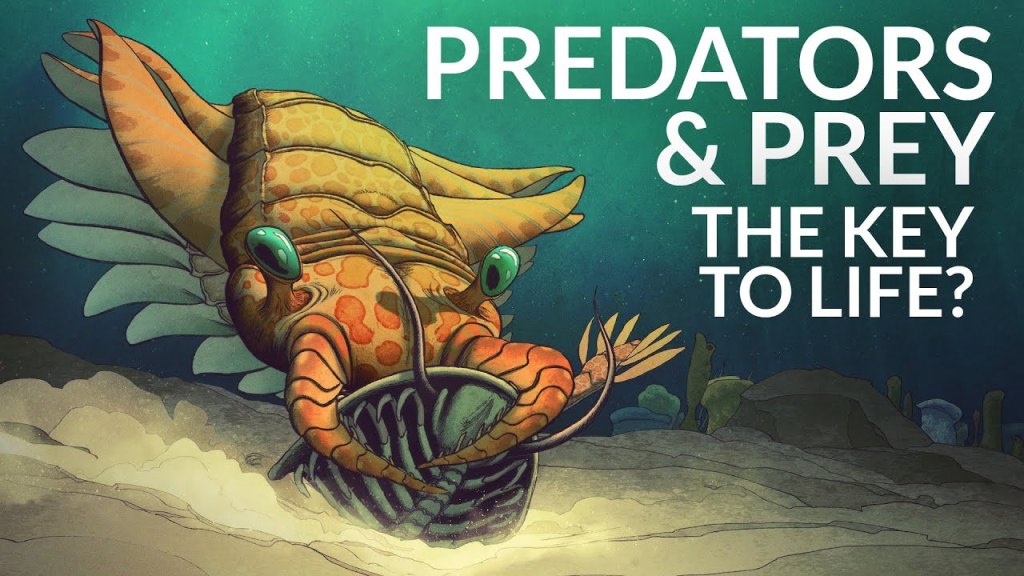
My latest video for the channel: ‘What was the First Predator on Earth?’ is no exception. For most of Earth’s history, life got by with the simplest of two-tiered food chains. Priamry producers took energy from the sun or the earth and turned it into nutritious organic molecules. And opportunistic consumers and decomposers used those organic molecules for their food. So far, so peacefully pastoral. But with the rise of animals, their larger size and larger energy requirements called for a new approach leading, a scant few million years after the Cambrian Explosion, to the first apex predator: Anomalcaris.
This video takes us on a journey from the surprising discovery of anomalcaris thanks to an unthinkable act of fossil destruction, through the roles and ramifications of predation in an ecoystem, the ever-accelerating arms race that predator-prey interactions ignite, to finally how we can use the fossil evidence to interpret how anomalocaris lived in the Cambrian seas.
It was such a fun video to write, and a great story that pulls together principles of ecology, evolution, and traditional palaeontological endeavor. Almost makes me wish I was back at the coalface. Almost.
Give it a watch and tell me what you think? And yes, it is uncanny how anomalocaris looks like Trump in the thumbnail!






 Leila Battison