Tag: space

  • The World’s Biggest Geode (and How It Saved a Winery)

    The World’s Biggest Geode (and How It Saved a Winery)

    Like many children, I was captivated by museum gift shops, especially the shelves of glittering geodes. Crack one open and you’re rewarded with a surprise display of crystals hidden inside. Those pocket-sized treasures, though, are nothing compared to the largest geode in the world – one so vast it could swallow the entire gift shop whole.

    Interior of a geode cave with large, crystalline formations on the ceiling, two visitors gazing in awe at the stunning mineral display.

    The story begins in 1897 on South Bass Island, Ohio, where German-American winemaker Gustav Heineman had set up a vineyard. When he ordered a well to be dug to supply water for his vines, workers broke into a cavern 12 metres down. Instead of solid rock, they found a cave lined with enormous crystals.

    The cave’s origins trace back hundreds of millions of years. During the Silurian period, 430 million years ago, this part of North America was covered by shallow seas. Layers of sedimentary rock formed, including lenses of the evaporite mineral anhydrite (calcium sulfate). Fast forward to the end of the last Ice Age: meltwater from retreating glaciers and nearby Lake Erie seeped through the rocks, dissolving the anhydrite and leaving behind empty cavities.

    Normally, these spaces might become crystal-lined geodes filled with quartz or amethyst. But here, something unusual happened. The groundwater was rich in strontium. As it interacted with the dissolving anhydrite, calcium ions were replaced by strontium, forming celestine – pale blue, glassy crystals of strontium sulfate. Over thousands of years, they grew to extraordinary sizes, some more than a metre across, filling the cavern with their sky-coloured sparkle.

    The cave, however, didn’t remain untouched. In the early 20th century, miners extracted around 150 metric tons of celestine crystals, not as souvenirs but as a source of strontium for the fireworks industry, where it produced a brilliant crimson flame. The removal enlarged the cavern to its current size – 11 metres across and tall enough to stand in.

    Recognising an opportunity, Heineman’s son Norman opened the cave to visitors in 1919. The timing was fortuitous: during Prohibition, when most Ohio wineries were forced to shut, ticket sales to the “Crystal Cave” (along with grape juice) kept the business alive.

    Today, more than a century later, the Heineman Winery and its glittering celestine cavern still welcome tourists, making South Bass Island home to both award-winning wines and the largest geode on Earth.


    This year I’ve had the pleasure and privilege of writing a series of mineral-focused scripts for SciShow’s limited-run Rocks Box subscription. It’s been such a joy being able to nerd out about rocks and minerals. I’ll write about anything, but geology will always be my first love. Watch this space for many more rocks-related updates!

    Watch the full video from SciShow here:

  • Epidote: The Green Mineral That Could Hold Clues to Life’s Origins

    Epidote: The Green Mineral That Could Hold Clues to Life’s Origins

    At first glance, epidote might look like a perfectly ordinary rock: greenish, slightly glassy, nice enough to put on your bookshelf. But this mineral is far more than just decoration. Epidote could help unlock the mystery of life’s earliest origins on Earth, and perhaps even beyond.

    The fossil record is our best archive for understanding the history of life, but it has limits. The deeper back in time you go, the harder it becomes to find intact fossils. Earth’s plate tectonics are constantly recycling rocks, and the fossils that do survive tend to be battered, squashed, or melted beyond recognition. Add to this the fact that the earliest life forms were likely tiny, soft, and strange-looking, and the trail of evidence gets very faint indeed.

    That’s where minerals like epidote come into play. Formed when hot fluids percolate through volcanic rocks in a process known as epidotization, this mineral often appears in striking pistachio-green veins. On Earth today, these hydrothermal systems occur at places like mid-ocean ridges and subduction zones, where scalding fluids rise from cracks in the crust to form black smoker chimneys. Despite the heat, these are thriving ecosystems, and many scientists think they resemble the extreme environments where life first emerged billions of years ago.

    Because epidote is a signature of ancient hydrothermal activity, finding it in very old rocks can point us to past habitats where early microbes might have lived. That’s exactly what researchers in the Pilbara region of northwestern Australia have been doing. The Pilbara hosts some of the world’s oldest rocks, dating back 3.5 billion years, along with some of the earliest fossil evidence of simple, bacteria-like life. These fossils are fragmentary, but the presence of epidotized rocks helps scientists target the ancient hydrothermal systems where life may once have thrived.

    Epidote isn’t just about Earth’s history either. Since it flags hydrothermal activity, and by extension, potential habitability, it’s also a mineral of interest on Mars. NASA’s Spirit and Opportunity rovers have already detected trace amounts of epidote on the Red Planet, and future missions will keep watch for more. If found in the right context, those green veins could be a roadmap to places where Martian life once might have had a chance.

    So, next time you see a small green crystal of epidote, remember: it’s more than just a mineral. It’s a window into life’s extreme beginnings, and perhaps a guide to finding it elsewhere in the solar system.


    This year I’ve had the pleasure and privilege of writing a series of mineral-focused scripts for SciShow’s limited-run Rocks Box subscription. It’s been such a joy being able to nerd out about rocks and minerals. I’ll write about anything, but geology will always be my first love. Watch this space for many more rocks-related updates!

    Watch the full video from SciShow here:
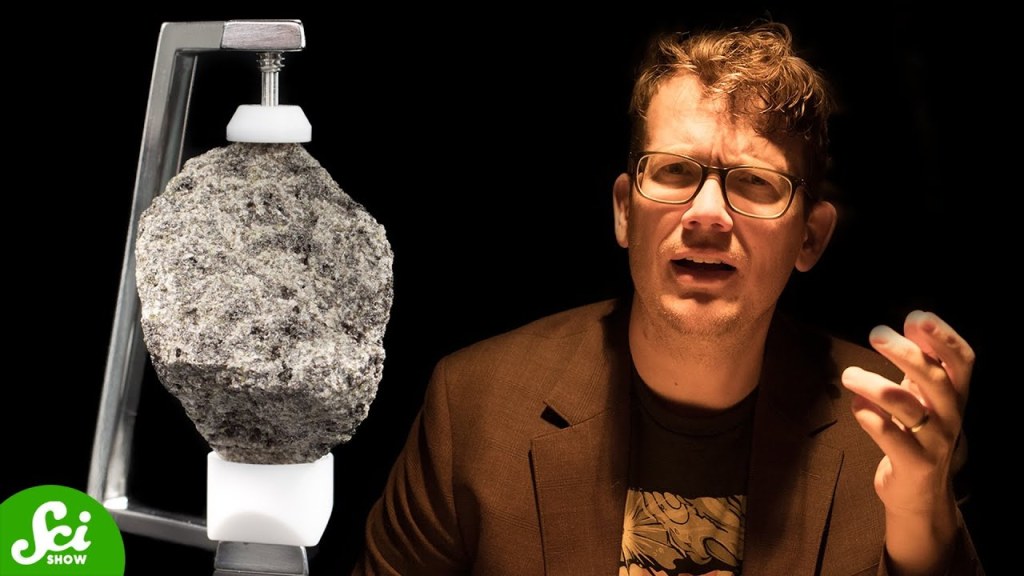
  • The Audacious Moon Rock Heist You’ve Probably Never Heard Of

    The Audacious Moon Rock Heist You’ve Probably Never Heard Of

    On July 20, 2002, 33 years to the day after Apollo 11’s first moon landing, NASA intern Thad Roberts was about to make history of his own, not by stepping into space, but by stepping into a Florida restaurant with a fishing tackle box full of stolen moon rocks.

    Roberts, once a promising student in NASA’s competitive internship program, had orchestrated a bold theft from Houston’s Johnson Space Center. With help from fellow interns, he wheeled out a 300-kilogram safe containing over 100 grams of moon rock samples collected from every Apollo mission. His goal? Sell them on the black market to a Belgian mineral collector for $100,000.

    But what Roberts didn’t know was that his buyer had tipped off the FBI, and the supposed meeting in Orlando was in fact a sting operation. Roberts and his accomplices were arrested before the deal could be made. However, even though NASA’s most valuable scientific specimens were recovered, irreparable damage had already been done.

    That’s because moon rocks are more than just souvenirs. They are also priceless scientific tools and symbolic relics. The Apollo missions brought back 382 kilograms of lunar material, which has since been carefully cataloged and stored in airtight vaults more secure than some banks. These samples have unlocked secrets of our solar system, helping scientists confirm the “giant impact” theory of the Moon’s formation and offering insights into early planetary geology.

    Thad saw his theft as a victimless crime, but many of the samples he stole became scientifically unusable due to contamination and mishandling. Worse still, he also discarded irreplaceable research notebooks belonging to a senior NASA scientist, essentially trashing 30 years of work.

    But Roberts’ story is just one thread in a larger tale: he’s not the only person to have been preoccupided with moon rocks over the years. After Apollo 11 and 17, the U.S. gifted tiny moon rock samples to all 50 US states and over 100 countries as diplomatic “Goodwill Rocks.” Many have since gone missing—lost in museum fires, stolen from public displays, or secretly sold on the black market. Over the years, about 240 of the total 30 goodwill rocks have gone missing, and former NASA special agent Joseph Gutheinz has made it his mission to recover these missing moon rocks.

    Gutheinz’s obsession began when he led a successful sting operation in 1998 to recover Honduras’s Apollo 17 rock. Since then, he’s involved students in the search, too, and together they’ve tracked down samples buried in archives, sitting in governors’ offices, and stashed in private collections. They’ve located 78 of them, but around 159 remain unaccounted for.

    Meanwhile, the legal sale of any Apollo moon rock remains strictly forbidden, but that doesn’t stop lunar material fetching millions on the black market. One gram of Apollo dust could be worth over $2 million, based on the cost of the missions. Even a speck from a Soviet sample return mission has sold for hundreds of thousands. It’s little wonder Thad Roberts went to the effort he did for a few teaspoons of lunar material.

    More than two decades later, Roberts’ heist stands as a cautionary tale: about ambition gone rogue, about the fragility of scientific legacy, and about the enduring fascination with the Moon. For those like Gutheinz, the mission continues—not to return to the Moon, but to return pieces of it back to the people.

    Watch the full video here: