Last year I was handed one of those rare and delightful projects as a science communicator: a deep-dive story that was as strange as it was true, and that went on to reach more than 6.5 million viewers on YouTube (so far!) The video: “An Ancient Roman Shipwreck May Explain the Universe”, was later named a Webby Award Honoree. It still feels surreal to type that.
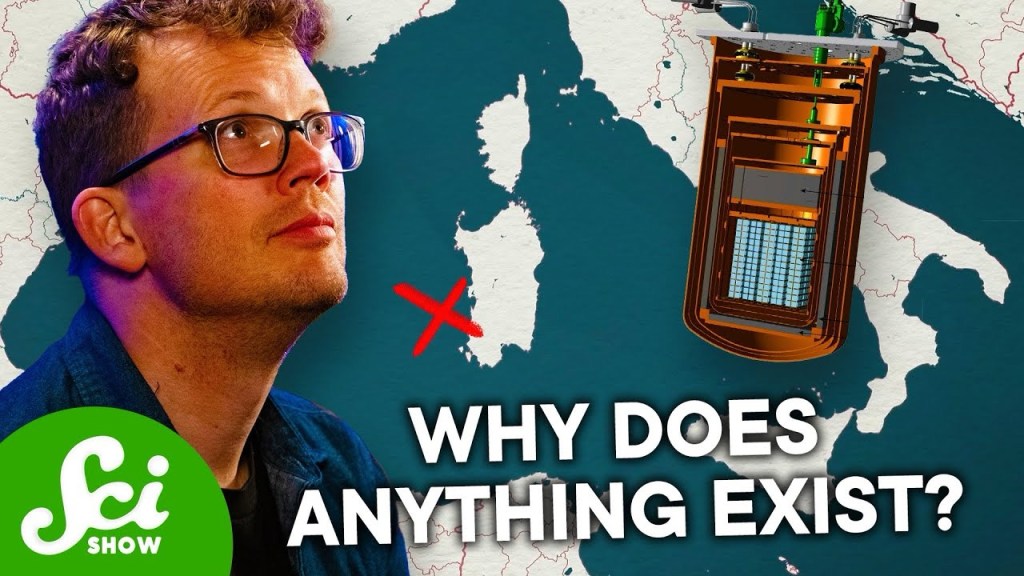
The story begins 2,000 years ago, when a Roman merchant ship, laden with more than 30 tonnes of lead ingots, sank off the coast of Sardinia. The crew probably thought they had lost everything. In fact, their cargo would end up with a second life: one that no ancient Roman could possibly have imagined.
Fast forward two millennia. That same Roman lead is now protecting the coldest cubic meter in the universe, part of an experiment buried deep under Italy’s Apennine mountains. The CUORE project, designed to study the mysterious neutrino, needed shielding so pure that modern lead was unusable. Only centuries-old metal, stripped of radioactivity by time itself, would do. So archaeologists and physicists found themselves negotiating over a shipwreck.

That unlikely collaboration became the heart of the video: a tale of archaeology colliding with particle physics, of cultural heritage pitted against cosmic mystery. At stake were two very different kinds of knowledge. Archaeologists wanted to preserve a Roman moment frozen in time. Physicists wanted to answer one of the universe’s deepest riddles: why matter exists at all.
The script wove together these threads, from the names stamped on Roman ingots to the near-impossible search for neutrinoless double beta decay. It was as much about people as particles, and about how science often advances through tension, compromise, and shared curiosity.
When we released it on SciShow, I suspected it would do well—the story has all the makings of a thriller—but I couldn’t have predicted just how widely it would resonate. The comments section filled with people marvelling at the audacity of both the Romans and the physicists, and debating the ethics of melting archaeological treasure to solve cosmic puzzles.
For me, the video represents what I love most about science communication: finding connections across time and discipline, and showing how the past and present continually shape one another. That a Roman cargo ship could one day help physicists understand why there is a universe at all—that’s the kind of story worth telling, and I’m so glad millions of people wanted to listen.
Watch the full video here:
 Leila Battison
Leave a comment