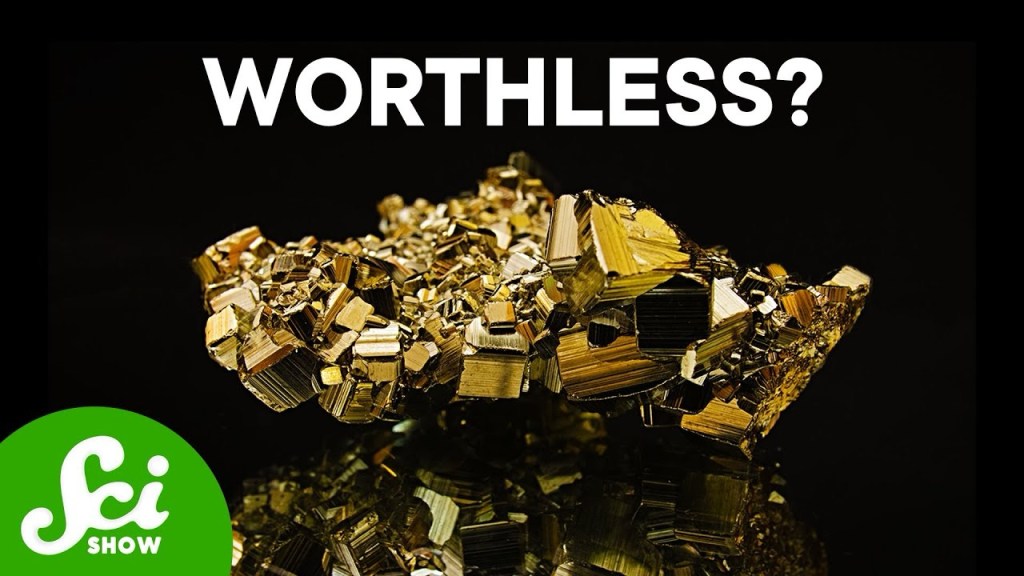
Back in the 1840s, the hills of California glittered with the promise of fortune. Prospectors rushed west, hoping to strike it rich in the Gold Rush, only to find themselves duped by an impostor: pyrite, better known as fool’s gold.
But pyrite might not be as foolish as we once imagined. Far from worthless, it’s turned out to be one of the most useful and versatile minerals we’ve ever dug out of the ground.
A Spark of Inspiration
The name pyrite comes from the Greek pyr, meaning “fire,” because striking it against metal produces sparks. Made simply of iron and sulfur, it forms into dazzling crystals shaped like cubes, octahedrons, even dodecahedrons that may have inspired Plato’s famous geometric “Platonic solids.” It’s abundant, too, appearing in mineral veins, coal seams, caves, magma intrusions, and even fossils preserved entirely in sparkling pyrite.
With so much of it around, people have found ingenious uses for it. In the 1500s, pyrite was the spark in Europe’s earliest firearms, where a steel wheel scraped against it to ignite gunpowder.
The Sulfur Connection
Surprisingly, pyrite isn’t actually a good source of iron (it’s easier to smelt from minerals like hematite), but it shines as a source of sulfur. For centuries, pyrite was roasted to produce sulfur dioxide, as the first step in making sulfuric acid, the most widely used industrial chemical on Earth. From fertilizers and car batteries to explosives and bleach, sulfur from pyrite powered industries long before oil refining took over as our main sulfur source.
Helping Copper Float
Pyrite has another trick up its sleeve. Copper is often mined from chalcopyrite, which frequently forms alongside pyrite. Extracting the copper involves a frothy separation process, literally making a copper-rich foam that floats to the surface of water tanks. But tiny chalcopyrite particles are often lost in the process.
Researchers have discovered that finely ground pyrite can act like a floatation aid, sticking to those lost copper crumbs and carrying them up into the foam. This could allow miners to recover nearly all the copper in a deposit.
The Golden Secret
And then there’s the irony: pyrite may actually be a key to finding real gold.
Because pyrite and gold often form together, rusty pyrite-rich deposits at the surface (known as gossans) can guide miners to deeper gold veins. Even more intriguingly, scientists have discovered that pyrite itself sometimes traps gold. Tiny inclusions, atom-for-atom replacements in its crystal structure, or even gold clustering in structural imperfections, all hide gold in plain sight.
The newest frontier is using rock-eating bacteria in a process called bio-leaching to tease out that hidden treasure. By targeting weakened spots in pyrite crystals where gold has accumulated, microbes could help extract the metal in a far more environmentally friendly way than traditional smelting.
More Than an Impostor
Once dismissed as a nuisance by disappointed gold-hunters, pyrite turns out to be a mineral of fire, sulfur, copper, and even gold. Fools’ gold? Hardly. Sometimes, the glittering stuff underfoot has more to offer than the treasure we think we’re chasing.
This year I’ve had the pleasure and privilege of writing a series of mineral-focused scripts for SciShow’s limited-run Rocks Box subscription. It’s been such a joy being able to nerd out about rocks and minerals. I’ll write about anything, but geology will always be my first love. Watch this space for many more rocks-related updates!
 Leila Battison
Leave a comment